Loading cart contents...



AfricAvenir International e.V.
AfricAvenir International e.V. is a politically independent, non-profit organisation based in Berlin. The organisation emerged from the internationally oriented work of the AfricAvenir International Foundation in Douala, Cameroon.
We are committed to the equal coexistence of all people – free from colonial or racist thinking and behaviour and the resulting power structures. We are committed to anti-discriminatory political education and knowledge production from African perspectives.
One aim of our work is to involve actors from the Global South and people living in Europe with BIPoC perspectives, and in particular African and Afro-European academics, activists and artists, in our activities. It is important to us to discuss current socio-political and economic situations in their historical and global development and to clarify these connections.
Since its foundation in 2000, AfricAvenir International e.V. has created different approaches to political issues through various formats such as workshops, training courses, dialogue forums, screenings of African films with audience discussions, specialist conferences, exhibitions, theatre and lecture performances.
Prinz Kum’a Ndumbe III.
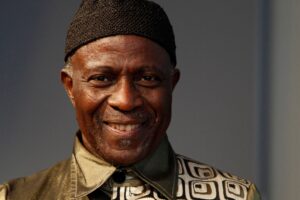
Prince Kum’a Ndumbe III – the founder of AfricAvenir International – is an internationally highly respected and committed pan-African academic, a prolific writer and the legitimate heir to the throne of Lock Priso (Kum’a Mbape), one of the most important traditional kings of the coastal peoples of Cameroon (Sawa). Throughout his life, he has been committed to the renaissance and critical reappraisal and rehabilitation of African cultures and the continent’s history. In the early 1980s, Prince Kum’a Ndumbe III founded AfricAvenir as an independent and African cultural centre.
The Board of AfricAvenir in Berlin
Lawrence Oduro-Sarpong
1st Chairperson
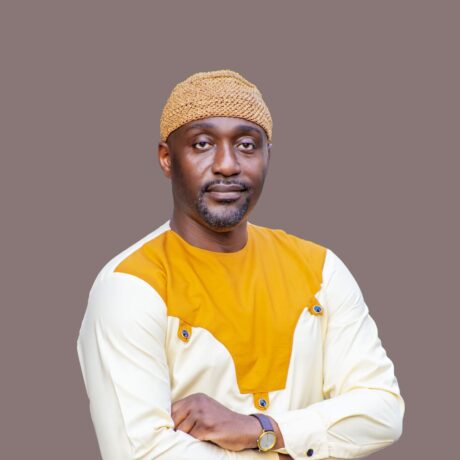
Paawana Abalo
2nd Chairperson

Amina Hikari Fall
Vorstandsmitglied

Trainers
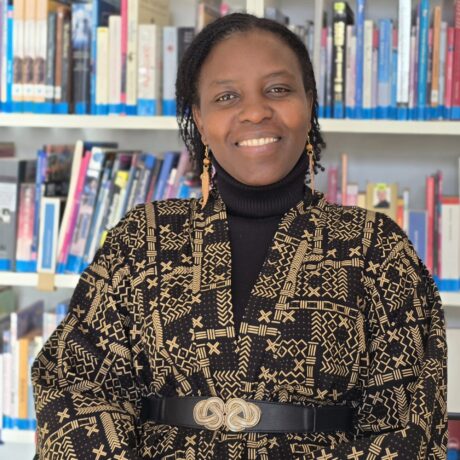
Susan Mwai
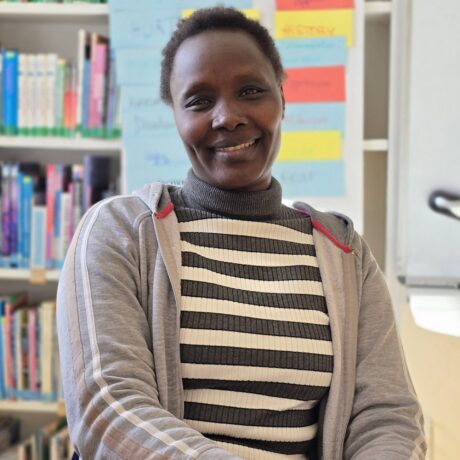
Napuli Paul
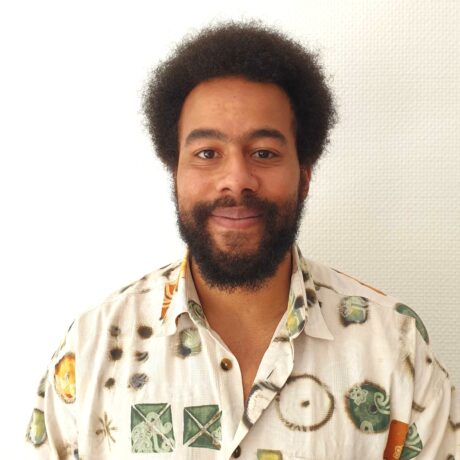
Darius Adu Bright
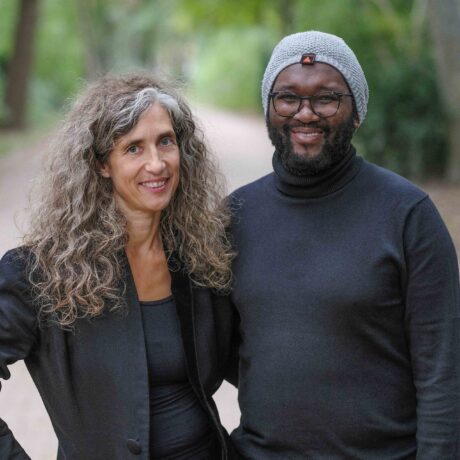
Julia Dittmann and Stanley Silewu
Mauricio Pereyra

The Team
Maria Leue
Project management
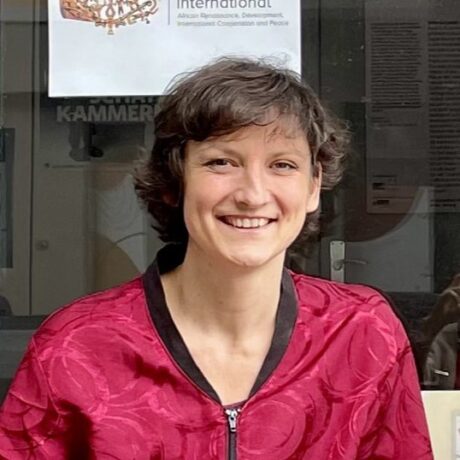
Leonie Rupp
Project assistance
Paul Suckow
Volunteer

Ibrahima Balde
Volunteer

Zoe Janjatovic
Volunteer

AfricAvenir: History – Vision – Goals
International structure: Douala, Vienna & Paris
AfricAvenir Douala
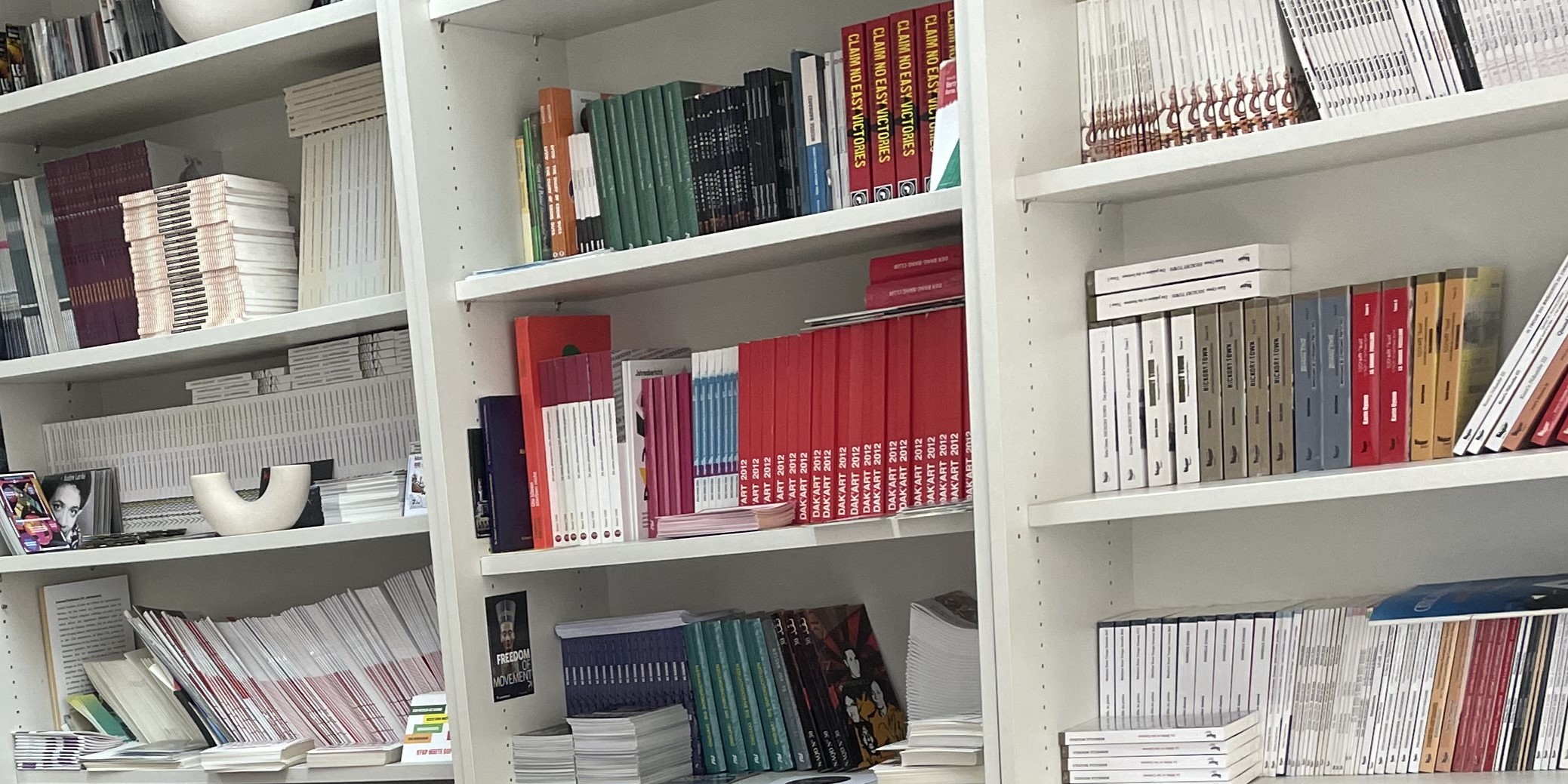
AfricAvenir is a politically independent, non-profit foundation founded in 1985 in Douala, Cameroon by Prof Kum’a Ndumbe III and others. The headquarters of the non-governmental organisation is in Bonabéri in Douala, Cameroon, consisting of a multi-purpose event room where lectures, film events, exhibitions etc. take place regularly, a unique library with mainly African authors and in numerous Cameroonian and African languages, as well as the book and handicraft shop “Le Génie Africain”. The foundation carries out political and cultural education work. More information: https://africavenir-international.org/
AfricAvenir Vienna
AfricAvenir has a long-standing and excellent relationship with several Austrian institutions and organisations that have supported AfricAvenir projects and activities as partners and sponsors for many years (especially the City and Academy of Graz and the Green Academy). During these years of co-operation, individuals have also been strongly committed to AfricAvenir’s goals and are – even if not yet under the legal umbrella of a registered NGO – de facto implementing AfricAvenir activities in Austria, mainly through school projects and partnerships. The foundation of a registered AfricAvenir section in Vienna is in progress.
AfricAvenir Paris
After Germany (AfricAvenir Berlin) and Austria (AfricAvenir Vienna), France is the third European country to host an AfricAvenir section. As there is a strong African community in France and it is constantly campaigning for the foundation to be established there, it was more than necessary to set up a section in Paris in order to continue or support the activities and philosophy of the head office in Douala and thus spread the foundation’s message more effectively in French-speaking Europe and throughout the world. AfricAvenir Paris was founded in 2015 and is managed by a team of multidisciplinary intellectuals (theologians, lawyers, economists, etc.). It is led by the Reverend Pastor Philippe Kabongo Mbaya.
Our History
Initially organised as a student group at the Otto Suhr Institute for Political Science at the Free University of Berlin, the association was founded in 2000. Since January 2004, it has been officially registered as a non-profit and politically independent organisation under the name AfricAvenir International e.V.
Our Vision
AfricAvenir stands for a self-confident, peaceful and prosperous Africa in a just world order. We are committed to equal coexistence for all people, free from colonial or racist thinking and behaviour and the resulting power structures. We support the pan-African values of the African Renaissance. We work for a Europe that consciously recognises and actively addresses its responsibility in the past and present. We name injustice and advocate reconciliation.
Our Goals: Reappraisal – Recognition – Exchange
AfricAvenir International e.V. creates spaces for the production and dissemination of knowledge from African and migrant-diasporic perspectives. Raising awareness and changing perspectives in the sense of critical whiteness form the basis of our work. We offer interdisciplinary programmes in the fields of cultural and political education.
Reappraisal
We are committed to a (self-)critical reappraisal of African-European history and the overcoming of current power structures and (neo)colonial patterns of behaviour in all areas, especially in politics, business, science, society and culture. We create spaces and public spheres to enable a debate on Europe’s colonial and imperial past and present. In doing so, we pursue an honest and solidary policy of reconciliation, in which we specifically name injustices and advocate reparations. The aim is to rectify relations with Africa, enabling the people of the continent and its diaspora to develop independently at all levels and creating a framework in which the riches of Africa primarily benefit the people of Africa themselves.
Recognition
We contribute to the renaissance of the African continent. This includes supporting African societies to develop their own forms of government and society based on their own traditions, values and historical experiences, which serve the well-being of the majority of African societies. Africa’s development has been determined from the outside for far too long. In order to counter this dominant “white expertise” and the associated reproduction of paternalistic and (neo)colonial power structures, we create spaces for African and diasporic academics, activists, artists and cultural practitioners, whose structurally underrepresented perspectives we systematically and consistently place at the centre of debates. We oppose talking about Africa with dialogue with Africa and the diaspora. Our aim is to work together in solidarity, respecting and supporting the priorities of people in Africa and its diaspora.
Exchange
For us, intercultural dialogue, cooperation and direct exchange are both a goal and a path. They are not a one-way street: listening, recognising and, above all, learning from African positions are the foundation of our work. With this in mind, we strive to strengthen networking between people, organisations and institutions from Africa, the African diaspora and Europe. AfricAvenir International, with its various sections, stands for such networking and is part of a constantly growing network of co-operation partners. With various event formats such as exhibitions, performances, conferences and dialogue forums, we offer different platforms as learning fields for exchange and networking that invite the public to learn from African and diasporic perspectives.
Become a member!
You can choose between ordinary membership and supporting membership:
- The contribution for regular members is at least €50 per year, reduced €20 (pupils, students, unemployed, people with low income/wealth). We welcome the voluntary payment of a higher contribution. (Please enter this in the form!)
- The contribution for supporting members is at least €150 per year. You will receive a membership card which entitles you to free admission to all AfricAvenir International e.V. events. We are also happy to receive a higher voluntary contribution. (Please enter this in the form!)
Please print out the appropriate form (below), fill it out, sign it and send it back to us by post or e-mail (scan attached) (contact details in the form).
You can find more information on membership and contributions in our articles of association (§§ 3-5) and contribution statutes (also download below).
If you have any further questions, please contact us at: gro.rinevacirfa@ofni, Tel: 0049 (0)30-26934764.
Download form and information

Internship at AfricAvenir International e.V. in Berlin
AfricAvenir offers (unfortunately unpaid) internships in the field of cultural and project management. The interns are introduced to the project topics by our project coordinators and supervised in their work. Internships at AfricAvenir are at least three months long, with approx. 20 hours/week. The place of work is the office in Berlin-Wedding. If you are interested, please write to: gro.rinevacirfa@ofni
Co-operation Partners & Networks